Hjartasteinn – Heartstone Directed by Guðmundur Arnar Guðmundsson

Hjartasteinn – Heartstone
Directed by Guðmundur Arnar Guðmundsson
Starring: Baldur Einarsson, Blær Hinriksson, Diljá Valsdóttir, Katla Njálsdóttir, Jónína Þórdís Karlsdóttir, Rán Ragnarsdóttir, Nína Dögg Filippusdóttir, Sveinn Ólafur Gunnarsson, Nanna Kristín Magnúsdóttir, Søren Malling, Gunnar Jónsson, Daniel Hans Erlendsson, Theodór Pálsson, Sveinn Sigurbjörnsson
Countries: Iceland, Denmark
Year: 2016
Author: Roberto Matteucci
Click Here for Italian Version
“Let us consider the infinite possibilities.”
Slightly larger than South Korea in area, Iceland has roughly 394,000 (1) inhabitants, against South Korea’s 51 million.
The population figure, combined with the island's distance from continental Europe, frames life on the island, where nature prevails.
By expanding the geographical context, it becomes possible to imagine adolescence in a remote Icelandic village in the eastern part of the country, near the regional capital Egilsstaðir.
This little community is the setting for the film Hjartasteinn – Heartstone, directed by Guðmundur Arnar Guðmundsson, which premiered at the 73rd Venice Film Festival in the Giornate degli Autori section.
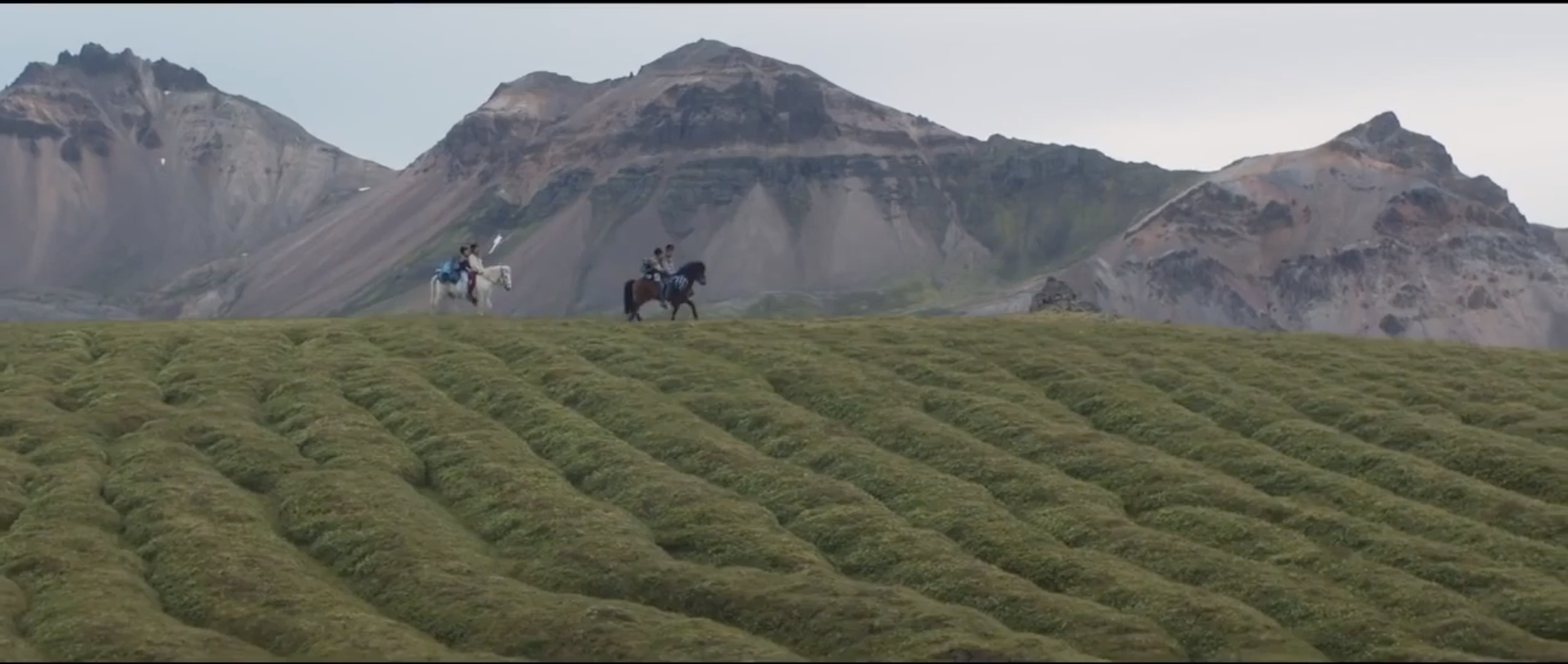
Despite its tiny size and sparse inhabitants, the place exudes immense naturalcharm. Greenery predominates, the mountains are delicate, and the sea reaches every nook and cranny. The only sources of disturbance are a few careless human actions, such as the exhaust fumes of broken cars.
Surrounded by such beauty, a group of young men are sunbathing. They are relaxed and bored, but one of them, Thor, is particularly restless. They begin fishing and manage to catch a large number of fish. Many are stonefish: "Christian looks like you." Christian is Thor's best friend. The village is claustrophobic. The young people are few, and they know each other. They only socialise among themselves. They have scant pastimes, and new acquaintances are rare.
Christian and Thor want to mature quickly, have girlfriends and become adults. Thor is dying to kiss himself in the mirror and eagerly checks to see if his armpit hair is growing.
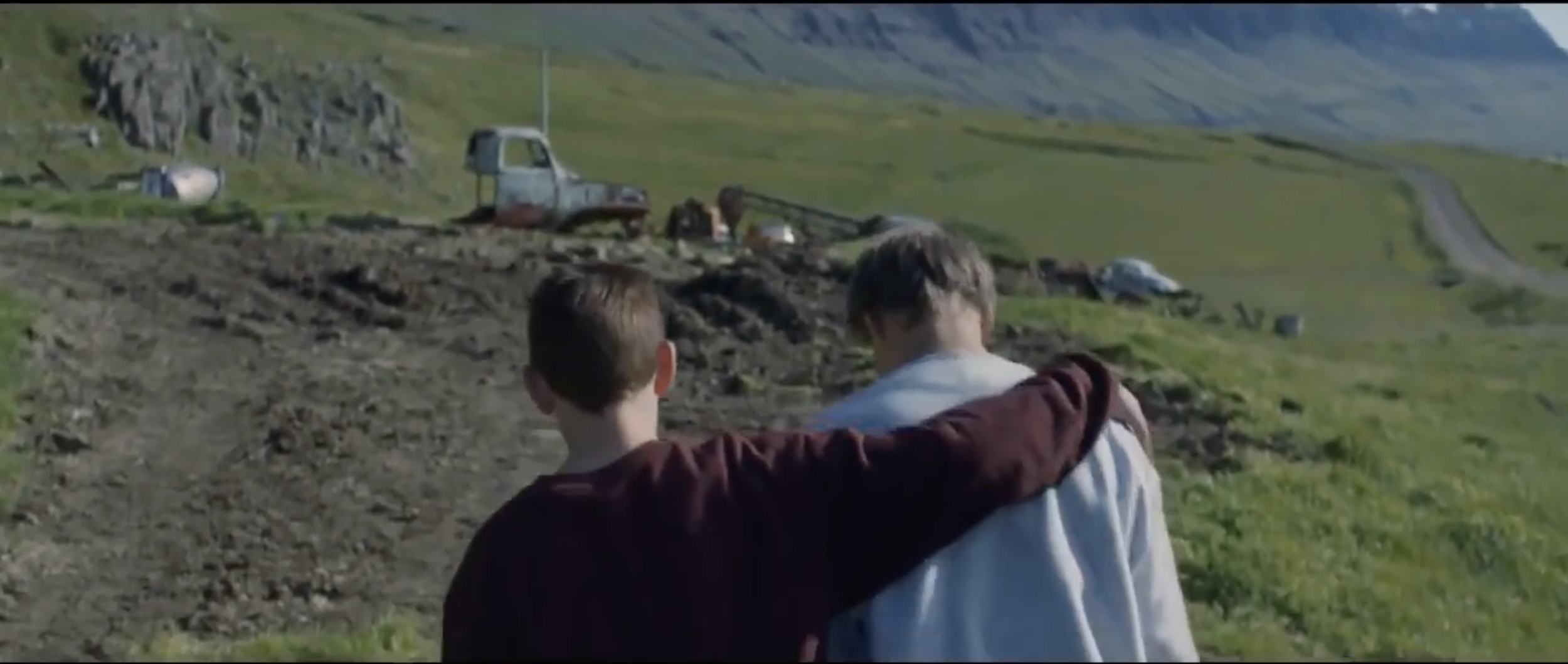
The two friends are always together, prompting teasing from their companions: "How's our little couple doing?"
It is problematic to relate to each other in a closed environment, but it is not enough; even worse difficulties come from adults.
Christian's father is an alcoholic, quarrels in the bar, and appears in the street in a dreadful state. Thor's mother is worthless; she has no husband but three children, who criticize her for her affairs with various men.
The consequences of accumulated anxieties cause practical, comical, and moving tensions.
Thor feels the pressure, and the consequence is that he urinates in bed. Not coincidentally, this happens precisely when he and Christian spend the night with two girls.
Christian, on the other hand, has even greater panic, an uncontrollable anguish. He is too young, too immature, and his decision will be dramatic, leaving Thor in heartbreak.
A story with a simple, linear structure, but clear and determined in its point of view.
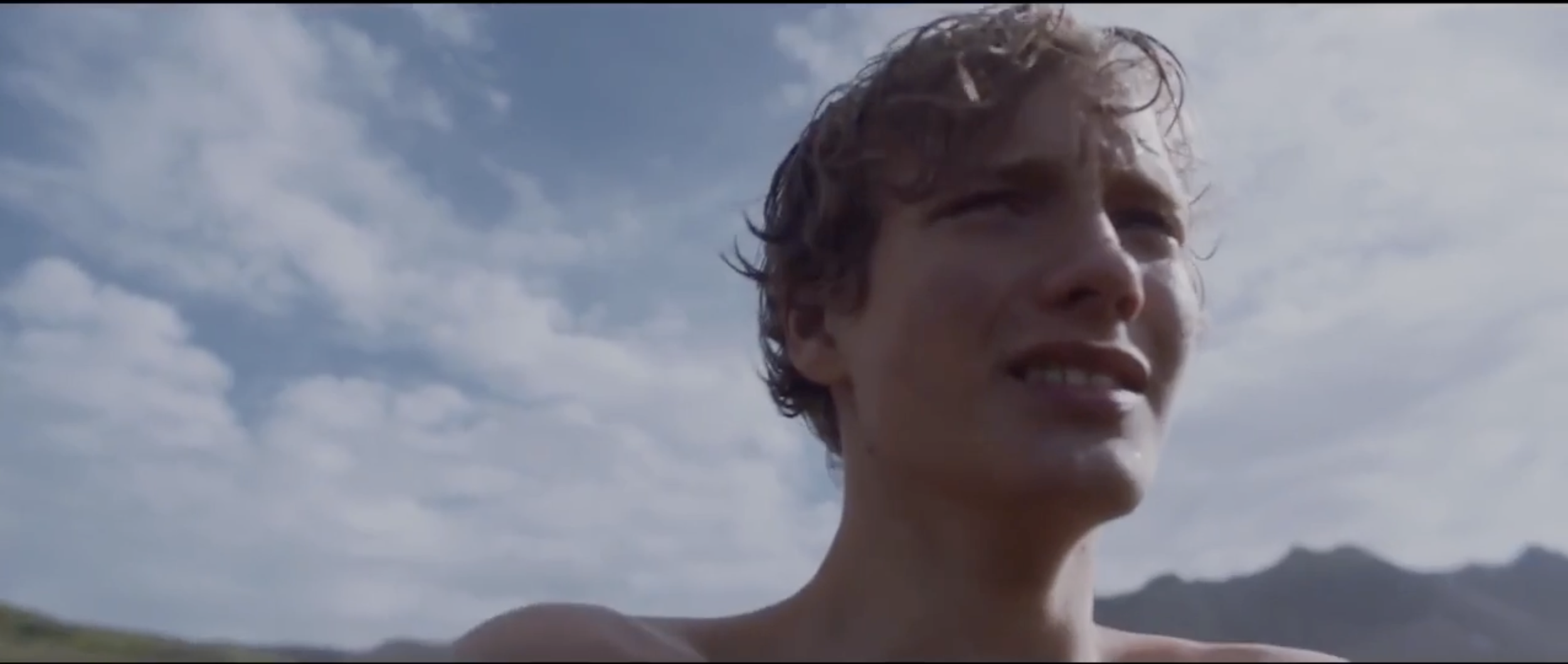
It is not the stereotypical film about homosexuality; it is a plot about wishing to become an adult fast. A normal, earthly passage. Often, it produces awkward behaviour, nervousness, and arguments. Other times, unfortunately, it causes irreversible casualties.
Throughout the film, the most striking atmosphere is claustrophobia. In spite of its beautiful and lush surroundings, Iceland reveals social tensions. The director explains:
"Iceland today is open in terms of acceptance and respect, and anyone who makes homophobic comments is simply considered stupid." (2)
Another shocking fact is the high number of suicides. Guðmundsson continues:
"In the town where I grew up, for sure: three kids tried to take their own lives, one of them unfortunately succeeded. Even one of my best friends committed suicide." (2)
The perception of loneliness is caused by a physical condition and aggravated by human ones. Therefore, the boys grow up in profound turmoil, in a restricted world.
He does not return home at night, and his mother does not even notice.
Thor's scream on the tractor is his way of expressing despair. Christian can't express it; his melancholy is internal.
The agitation eases when Christian's father takes the two friends to climb the mountain in extremely dangerous conditions. The boys hug each other in fear.
The film is skillfully shot, exalting both the territory and the two lads at the same time. The film privileges long shots, and some involve intimate scenes featuring the teenagers, such as the sexual games inside the car.
In the first part, the tone is cheerful, like a teen movie. In the second, the style turns gloomy, anxiety peaks, and the boys separate.
The scene is climactic. Thor is happy; he lets himself fall backwards onto the ground, having just had his first time with his friend, a girl. That joy is simultaneously the source of Christian's pain. Still on the ground, Thor hears a gunshot.
Only rage remains; he has no alternative.
Statistics Iceland, 27 February 2026, https://www.statice.is/ (accessed 1 March 2026)
Giacomo Cosua, «Venezia 73: doppio esordio islandese con “Heartstone”», 9 September 2016, http://xl.repubblica.it/articoli/venezia-73-doppio-esordio-islandese-con-heartstone/44798/ (accessed 1 March 2026) Author’s translation from the Italian edition.


Hjartasteinn – Heartstone explores the coming-of-age and homosexual life of two teens in a small Icelandic village. Directed by Guðmundur Arnar Guðmundsson, premiered at Venice Film Festival